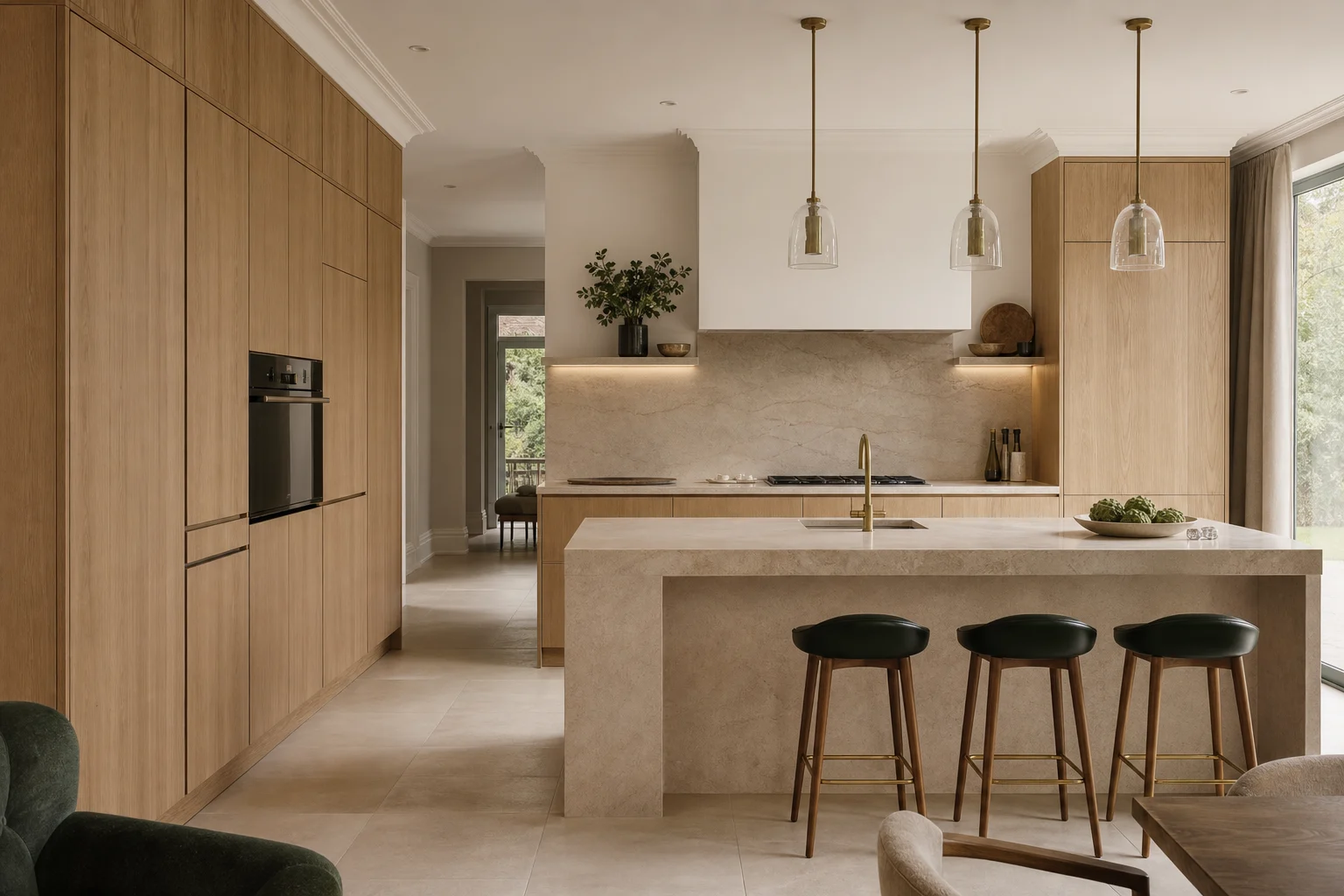
The portfolio system is a major scope decision
A simple gallery can display approved images. A useful project system may also need styles, materials, layouts, locations, project roles, before-and-after context and related consultation routes.
The work includes deciding which details help a homeowner judge relevance, preparing consistent assets and designing a system that remains manageable when new kitchens are added.
| Feature | Commercial purpose |
|---|---|
| Project case studies | Turn photography into evidence by explaining the brief, decisions and company role. |
| Style or material navigation | Help visitors narrow inspiration without creating empty filters. |
| Showroom information | Set accurate expectations around location, displays, access and appointments. |
| Consultation form | Capture project stage, location and service need without creating unnecessary friction. |
| Local landing content | Support genuine showroom or coverage relevance with distinct, maintained information. |
Content readiness affects both cost and quality
Approved photography, room details, service boundaries, showroom facts and product relationships need owners. If those assets are incomplete, the project may require content planning, writing, editing or a phased launch.
Supplier imagery and completed work should be labelled separately. That protects trust and prevents the website from presenting inspiration as delivered projects.
Existing sites add migration work
A redesign should inventory project URLs, service pages, indexed local content, forms and analytics before deciding what changes. Useful URLs may need to remain; moved content needs direct redirects and internal links must point to final destinations.
A visual refresh without this audit can lose the very visibility and project evidence the business has built over time.
Ask for a proposal tied to the showroom journey
A useful proposal explains how someone moves from search or inspiration to services, projects, showroom information and a consultation. It should also state content responsibilities, integrations, mobile behavior, technical SEO and launch checks.
Arkidis confirms investment after discovery rather than inventing a standard kitchen-website price that ignores those differences.
Frequently asked questions
Does every kitchen project need its own page?
Only projects with enough approved imagery and useful context. Strong individual case studies can support trust and search relevance; thin photo pages add little.
Can a kitchen website include quote requests?
Yes, but the form should match the business process and make clear whether the next step is a showroom consultation, home visit, design discussion or estimate.
Should showroom and installation areas have separate pages?
Only where each page answers a distinct, genuine need with accurate information. Repeated place-name pages are not a useful strategy.