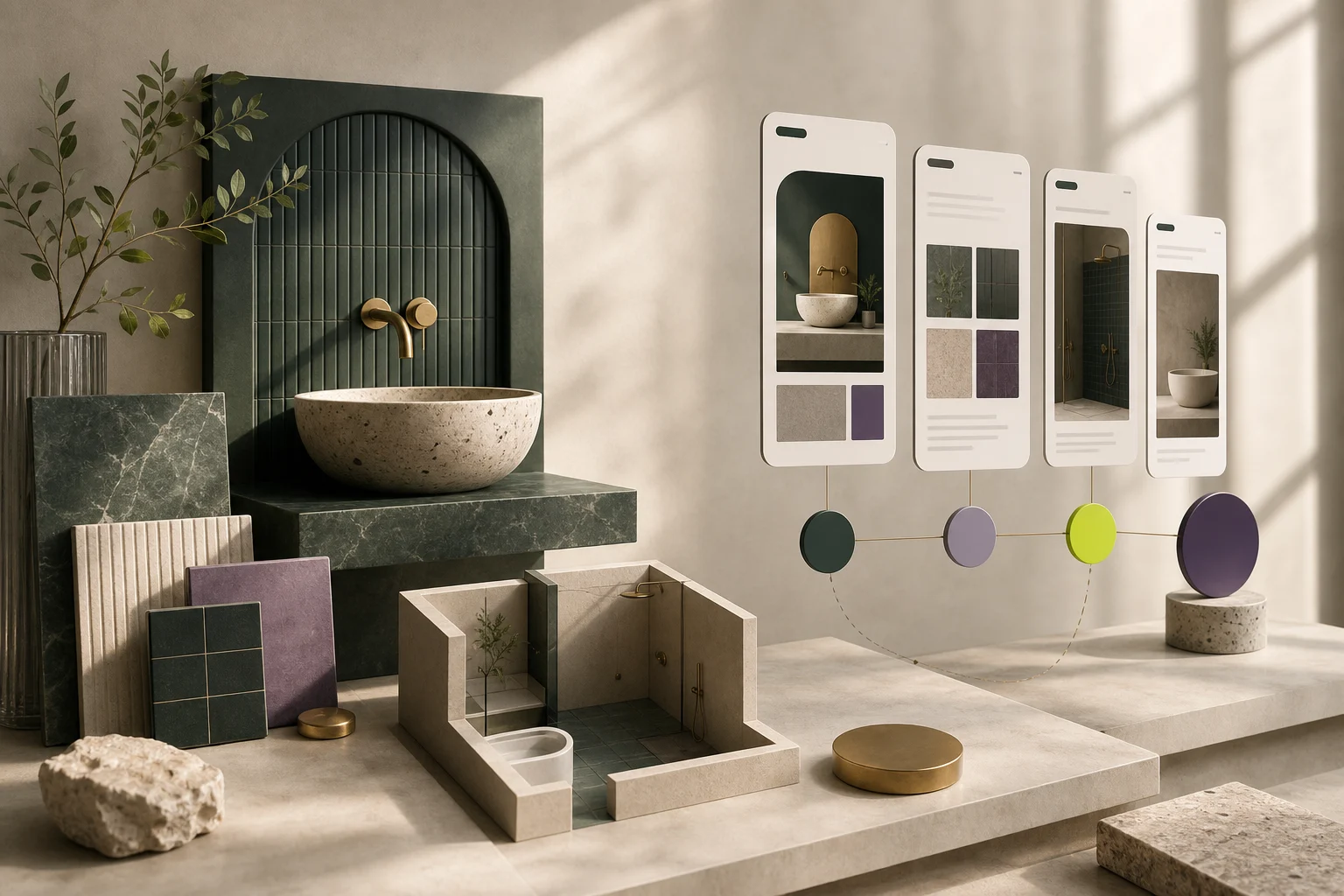
Separate the bathroom services customers are comparing
A product showroom, design studio, supply-only retailer and full renovation company solve different problems. The website should state the real service model early and give each meaningful audience a clear route.
Avoid forcing all visitors through one generic bathroom page. Separate content where the customer question, proof and next action are genuinely different, but do not create thin pages for every product name.
- Bathroom design and planning
- Product supply and showroom advice
- Full renovation or installation
- Wet rooms or accessibility expertise when verified
- Genuine showroom and service-area coverage
Use room-specific projects as proof
Bathroom customers compare constraints as well as style. Strong project pages can explain compact layouts, awkward plumbing, storage, lighting, ventilation, wet-room detailing or accessibility—only where those facts and the imagery are approved for publication.
Separate completed installations from manufacturer inspiration. Clear labels help visitors understand what the company actually delivered and make the portfolio more credible.
| Project detail | Why it matters |
|---|---|
| Starting room and constraint | Shows whether the business understands a comparable problem. |
| Design response | Explains layout, storage, lighting or accessibility decisions. |
| Products and materials | Supports inspiration without confusing supplier content with delivered work. |
| Installation responsibility | Clarifies whether the company designed, supplied, fitted or coordinated. |
| Relevant next step | Routes the visitor to a showroom, design or renovation enquiry. |
Make showroom information useful before the visit
Publish an accurate address, access details, opening information, appointment expectations and the types of displays available. If consultations are appointment-only, say so clearly. If the service is mobile or home-based, describe that genuine model instead.
A visitor should know whether the showroom fits the products and service they are researching. This practical clarity can improve lead quality before anyone completes a form.
Design the enquiry around the room and service
A bathroom enquiry form can ask for location, room type, service required, project stage and a short description. Avoid requesting technical measurements or product codes that an early-stage customer is unlikely to know.
Offer the right action beside the right content: a showroom appointment near display information, a renovation enquiry near completed projects and a design consultation near planning content.
- Keep mobile fields and tap targets accessible
- Explain the expected follow-up
- Do not imply instant quotes when a survey is required
- Track completed forms, calls and email clicks
- Review whether enquiries match genuine services and areas
Earn local visibility without duplicated area pages
Local bathroom content should connect accurate business details, real areas served, distinct services and approved project evidence. A useful showroom page can support local discovery because it helps a customer plan a real visit.
Do not copy a kitchen SEO template or automatically create a page for every nearby town. Publish only where the bathroom business has enough distinct information to answer a real local decision.
Judge success by qualified bathroom projects
Search Console can show queries and landing-page impressions. Analytics can show form submissions and contact clicks. The sales process must then identify which enquiries were relevant, in-area and suitable for the service.
That combined view prevents the content plan drifting toward high-volume topics that never become showroom visits, design consultations or installation projects.
Frequently asked questions
What should a bathroom enquiry form ask?
Start with location, room type, service required, project stage and a short description. Ask for technical detail later when the customer can provide it accurately.
Can supplier images be used on a bathroom website?
Yes when permission exists and they are labelled accurately. Keep supplier inspiration separate from projects the company actually completed.
How can a bathroom showroom improve local leads?
Publish accurate visit information, the displays and services available, appointment expectations and relevant completed work. Keep business information consistent wherever it appears.